
2026 Hyundai Tucson: Roomy, Refined and Familiar
The 2026 Hyundai Tucson is expected to carry over after its 2025 refresh, pairing a 187-hp engine with front- or all-wheel drive.
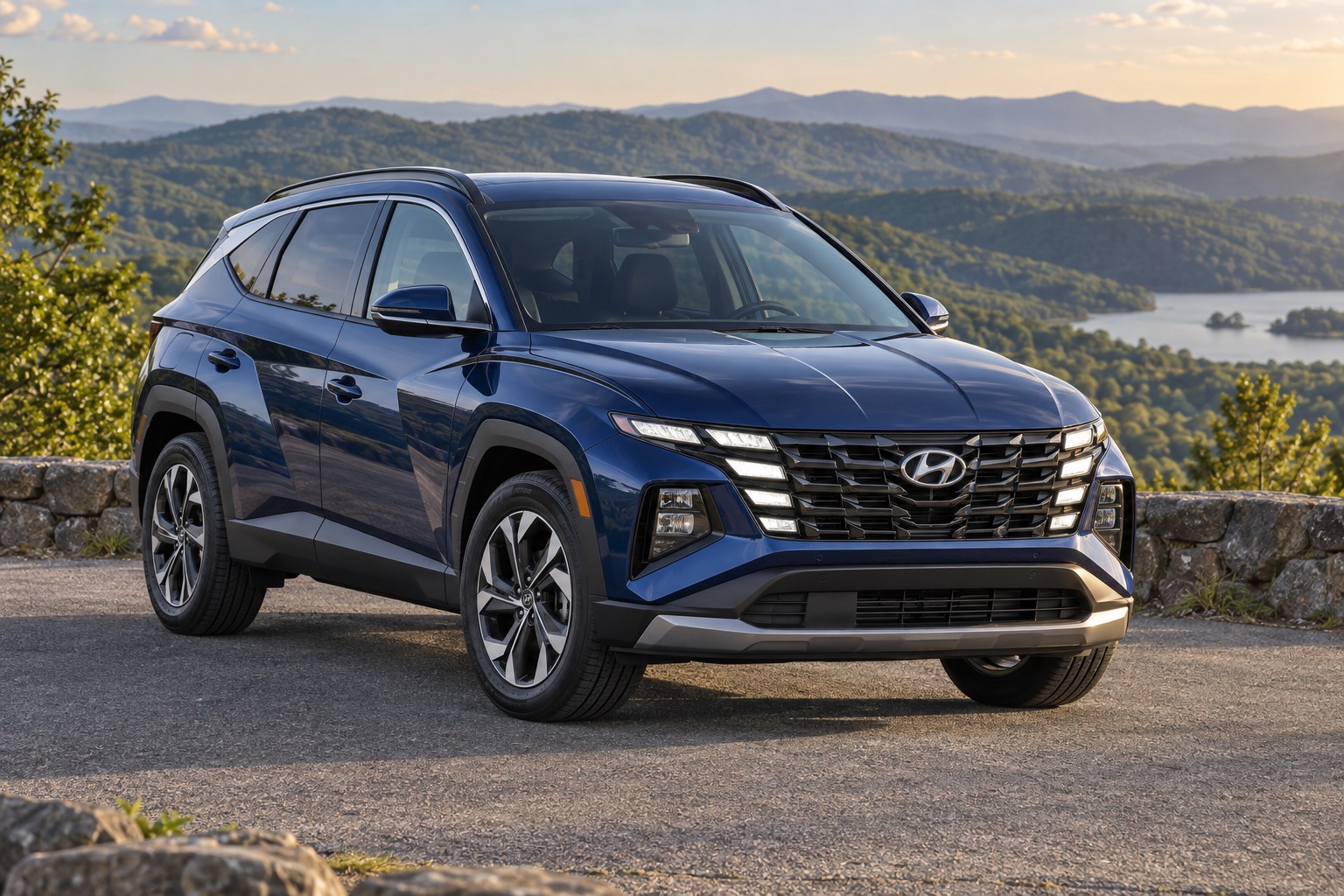
2026 Hyundai Tucson at a glance
The 2026 Hyundai Tucson is a sensible fit for shoppers who put roominess, quiet refinement and practicality ahead of quick acceleration. It is expected to have no significant changes after the 2025 refresh, so the central shopping questions are straightforward: Is the standard powertrain lively enough for you, and is front- or all-wheel drive the better match?
| Item | Details |
|---|---|
| Engine | Standard 187-hp 2.5-liter four-cylinder |
| Transmission | Eight-speed automatic |
| Drivetrain | Front-wheel drive or all-wheel drive |
| Rated combined fuel economy | 28 mpg with front-wheel drive; 26 mpg with all-wheel drive |
| 2026 outlook | No significant changes expected after the 2025 refresh |
What is new for 2026?
Not much is expected to change. The 2026 Tucson is expected to follow the 2025 refresh without significant updates, making this a familiar model-year proposition rather than a major rethink.
That stability can benefit shoppers who already like the Tucson’s formula. Anyone waiting specifically for a substantial redesign or a dramatic change should recognize that this model year is not expected to deliver one.
Powertrain and fuel-economy tradeoffs
The standard setup pairs a 187-hp 2.5-liter four-cylinder engine with an eight-speed automatic transmission. Shoppers can choose front-wheel drive or all-wheel drive.
The rated combined fuel-economy split is clear: front-wheel-drive versions are rated at 28 mpg, while all-wheel-drive versions are rated at 26 mpg. Front-wheel drive therefore has the higher rating on paper, while all-wheel drive is the choice for buyers who specifically want that drivetrain. The two-mpg difference is worth keeping in mind when comparing configurations.
Car and Driver also criticizes the Tucson’s fuel-economy test results as mediocre. That makes a test drive especially useful for shoppers who place a high priority on efficiency, rather than relying on the rating alone.
What the professional review says
Car and Driver’s assessment presents a balanced picture. The review describes the 2026 Tucson as roomy, refined, quiet and practical—qualities that matter in a vehicle intended for everyday use.
The reservations are equally important for the right shopper: Car and Driver calls the acceleration poky and criticizes the fuel-economy test results. In short, the Tucson’s strongest case is calm, useful transportation, not especially quick response or standout test efficiency.
Who should consider the 2026 Tucson?
- Shoppers who value a roomy, refined and quiet experience.
- Buyers who see practicality as more important than brisk acceleration.
- Drivers who can choose between front- and all-wheel drive based on their priorities, with the fuel-economy ratings clearly in view.
- Anyone comfortable buying a familiar post-refresh model instead of waiting for a major model-year change.
Who may want to wait?
- Drivers for whom quick acceleration is a top priority should take Car and Driver’s criticism seriously and spend time behind the wheel before committing.
- Shoppers focused on the strongest fuel-economy performance should investigate beyond the ratings, since the professional review found the test results mediocre.
- Buyers holding out for a significant redesign may prefer to wait or consider another vehicle, because no major 2026 changes are expected.
The bottom line
The 2026 Hyundai Tucson is appealing because it emphasizes roominess, refinement, quietness and practicality without introducing significant changes after the 2025 refresh. Its tradeoffs are the poky acceleration and mediocre fuel-economy test results identified by Car and Driver.
The drivetrain decision is simple but meaningful: front-wheel drive carries the higher 28-mpg combined rating, while all-wheel drive is rated at 26 mpg. Choose based on which configuration better fits your priorities, and make a test drive part of the decision if acceleration matters to you.
Sources
- Car and Driver — 2026 Hyundai Tucson review — observed 2026-09-07.
Sources
- Car and Driver — 2026 Hyundai Tucson review — checked September 7, 2026